
In This Article
ToggleKey Takeaways
- Porcelain and composite veneers both improve the appearance of chipped, stained, or uneven teeth, but they differ in durability, aesthetics, and treatment requirements.
- Porcelain veneers offer a more natural appearance, better stain resistance, and a longer lifespan.
- Composite veneers are faster and require less tooth preparation.
- The right choice depends on your cosmetic goals and long-term expectations, making a dental consultation the best place to start.
Your smile is often one of the first things people notice, and feeling confident about it can make a difference in everyday interactions. Research suggests that your smile plays an important role in how you perceive your own attractiveness and confidence.
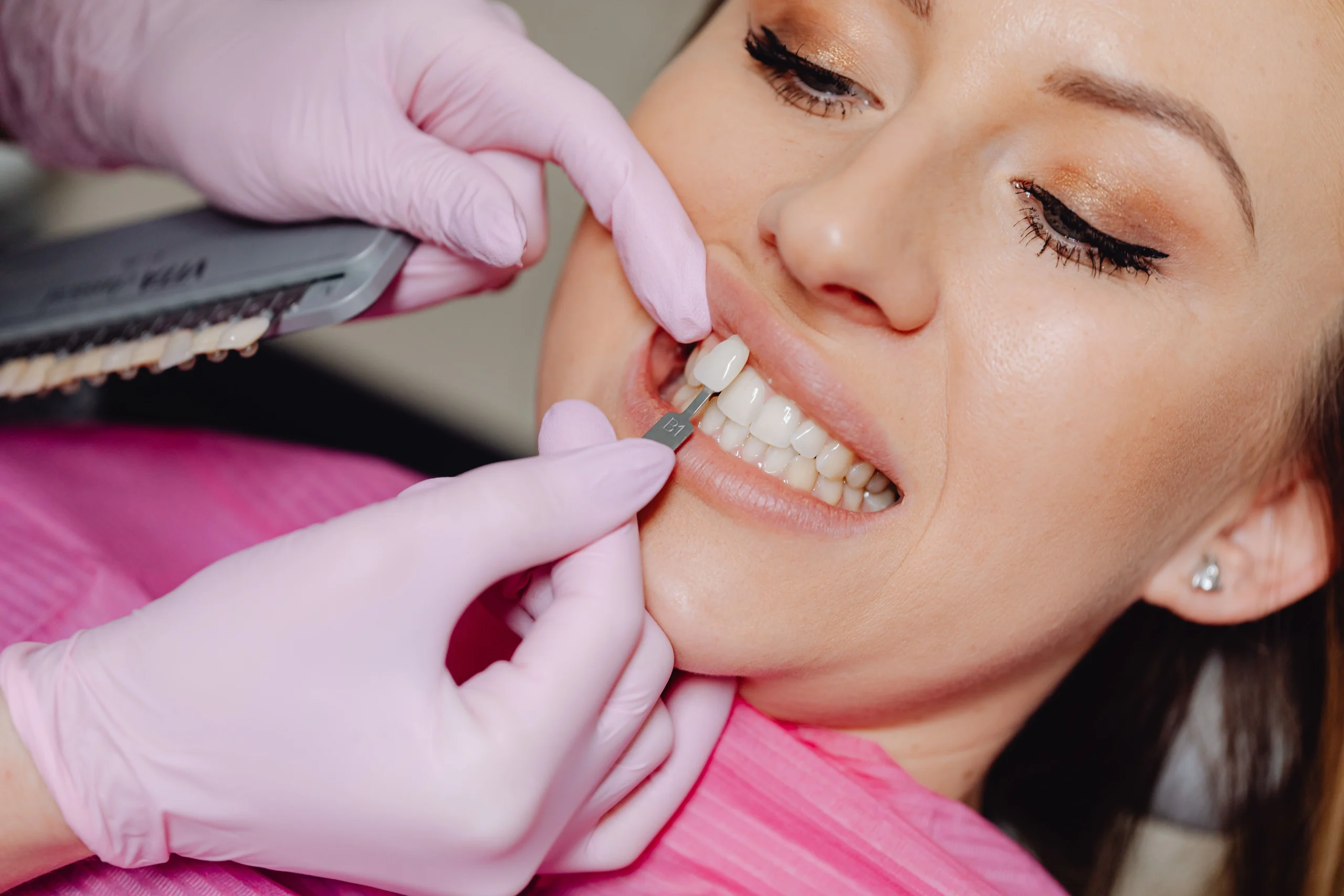
If you’re looking to improve the appearance of chipped, stained, uneven, or misshapen teeth, veneers are one of the most popular cosmetic dentistry options available. Veneers are thin coverings bonded to the front surface of teeth to enhance their appearance, but porcelain and composite veneers differ in durability, aesthetics, and treatment requirements. Understanding those differences can help you choose the option that best fits your goals and expectations before visiting a dental clinic for a consultation.
What Are Porcelain Veneers?
Porcelain veneers are thin ceramic shells custom-fabricated in a dental lab and bonded permanently to the front surface of your teeth. The process typically takes two appointments: one to prepare the tooth (a small amount of enamel is removed) and take impressions, and a second to bond the finished veneers once the lab delivers them.
Because they’re lab-made, porcelain veneers match the light-reflecting quality of natural tooth enamel better than any other cosmetic option. They resist staining well, hold their color over time, and generally last 10 to 15 years with proper care.
What Are Composite Veneers?
Composite veneers use tooth-colored resin (the same material used for dental bonding), applied directly to the tooth and shaped by the dentist chairside. No lab is involved, which means the entire procedure can be completed in a single visit. Little to no enamel removal is required, making them a reversible option in most cases.
However, they have limited durability. Composite resin is more prone to staining and chipping than porcelain, and the lifespan is 5 to 7 years before touch-ups or replacement become necessary.
Porcelain vs. Composite Veneers: Side-by-Side Differences
The differences between porcelain and composite veneers come down to a few practical factors.
| Feature | Porcelain Veneers | Composite Veneers |
| Appearance | Closely mimics the translucency and light reflection of natural enamel | Natural-looking but lacks the same depth and translucency as porcelain |
| Durability | Typically lasts 10–15 years or longer with proper care | Generally lasts 5–7 years before repair or replacement |
| Procedure | Requires at least two appointments and laboratory fabrication | Usually completed in a single visit |
| Enamel Removal | Requires a small amount of enamel reduction | Little to no enamel removal needed |
| Reversibility | Permanent due to enamel removal | Often considered reversible or minimally invasive |
| Stain Resistance | Highly resistant to staining from coffee, tea, and wine | More susceptible to staining over time |
| Repairs | Damage usually requires veneer replacement | Chips and minor damage can often be repaired chairside |
| Maintenance | Minimal maintenance beyond good oral hygiene | May require periodic polishing or touch-ups |
Porcelain vs. Composite Veneers: Pros and Cons
Understanding the pros and cons of porcelain vs. composite veneers can help you determine which option best aligns with your cosmetic goals and lifestyle.
| Veneer Type | Pros | Cons |
| Porcelain Veneers | Long-lasting (10–15+ years)Highly natural appearanceExcellent stain resistanceMaintains color and shine over time | Requires multiple appointmentsHigher upfront investmentInvolves permanent enamel removalDamaged veneers usually need replacement |
| Composite Veneers | Completed in a single visitMinimal tooth preparationEasier and less expensive to repairGood option for testing a new smile design | Shorter lifespan (5–7 years)More prone to stainingGreater risk of chipping and wearLess natural translucency than porcelain |
Which One Is Right for You?
The porcelain vs. composite veneers comparison isn’t really about which is objectively better but about which is right for your specific teeth, goals, and timeline.
Porcelain tends to be the stronger choice if you:
- Are treating multiple teeth
- Have significant discoloration that doesn’t respond to whitening
- Want a long-term solution with minimal upkeep
- Prioritize aesthetics and durability
Composite tends to work better if you:
- Need to improve the appearance of one or two teeth
- Want to see how veneers look before committing fully
- Need the work completed quickly
At Dental on First, Dr. Taylor Majerus and Dr. David Tycast believe that no two patients are the same. Dr. Majerus provides both veneers and composite restorations and emphasizes creating individualized treatment plans that support good oral health. Dr. Tycast approaches cosmetic decisions the same way, combining advanced dental technology with personalized care to help patients make informed cosmetic dentistry decisions. The clinic has served New Prague families across multiple generations, and that continuity of care means your dentist knows your dental history before recommending a veneer type.
Why See a Dentist Before Deciding
Reading about the differences between porcelain and composite veneers is useful, but the decision should always start with a clinical exam. The health of your underlying enamel, the extent of the cosmetic concern, your bite, and your long-term dental goals all factor in. A dentist can also walk you through what each option will realistically look like on your teeth.
If you’re in the New Prague area and want a clear, no-pressure conversation about veneers, the team at our dental clinic in New Prague, MN, is a good place to start.
Frequently Asked Questions
Yes. Because composite veneers require minimal enamel removal, patients can often upgrade to porcelain veneers later. Your dentist checks the health of your enamel before recommending that path.
Porcelain veneers last 10 to 15 years, while composite veneers can last 5 to 7 years, depending on your diet, oral hygiene habits, and whether you grind your teeth.
Porcelain veneers require minimal enamel removal, which is permanent. Composite veneers are minimally invasive and considered largely reversible. Neither option damages healthy teeth when placed correctly by a trained dentist.
Porcelain veneers are generally more durable than composite veneers, but both can be damaged by teeth grinding. If you have bruxism, your dentist may recommend a night guard and evaluate whether veneers are the right option for your needs.