In This Article
ToggleKey Takeaways
- Implants usually last longer and feel more like natural teeth. Dentures cost less upfront and don’t need surgery.
- Traditional dentures last about 7 to 10 years and need periodic relines. Implants can last a lifetime with good care.
- Implants need enough healthy jawbone. Dentures suit patients who can’t have surgery or don’t have enough bone.
- Implant-supported dentures are a middle option, with more stability than regular dentures at a lower cost than replacing every tooth with an implant.
Which Is Better for You: Implants or Dentures?
About 120 million people in the U.S. are missing at least one tooth, and more than 36 million have no teeth at all, according to the American College of Prosthodontists. If you’re one of them, the short answer on dental implants vs. dentures is this: implants are usually the longer-lasting, more stable choice when your jawbone and overall health allow it. Dentures are the faster, lower-cost choice that works for more people.
Neither option is wrong. The right one depends on your bone, health, budget, and how you want your new teeth to feel day to day. If you’re weighing both, it is worth exploring how the treatment for these dental implant services works. The sections below compare the two side by side so you can walk into your consultation with clear questions.
What Is the Difference Between Dental Implants and Dentures?
The main difference between dental implants and dentures is where the support comes from.
- A dental implant is a titanium post placed in the jawbone. Over a few months, it fuses with the bone and acts as a new tooth root. A crown, bridge, or denture then attaches to it.
- A traditional denture is a removable appliance with artificial teeth set in a gum-colored base. While a full denture rests on the gums and relies on suction against the palate or the lower jaw ridge to stay in place, a partial denture clips onto your remaining natural teeth.
That difference in support explains most of the limitations. Bone-anchored teeth don’t move. Gum-supported teeth can shift, especially on the lower jaw, where there is less surface area for suction.
Denture vs. Implant Comparison: Cost, Lifespan, Comfort, and Care
This denture vs. implant comparison covers the factors patients ask about most:
| Factor | Traditional Dentures | Dental Implants |
| Upfront cost | Lower | Higher |
| Surgery needed | No | Yes |
| Treatment time | A few weeks | Several months, mostly healing |
| Stability | Can shift or slip while eating or talking | Fixed in the jawbone |
| Jawbone | Bone shrinks gradually after tooth loss | Implants stimulate the bone and help slow loss |
| Lifespan | About 7 to 10 years, with relines every 1 to 2 years | Can last a lifetime with good care |
| Daily care | Remove nightly, clean, and soak | Brush and floss like natural teeth |
Dentures cost less at the start. However, replacements every decade and regular relines add up over time. The average denture lifespan is seven to 10 years. Implants can also cost more but can last a lifetime with proper care.
What Are the Pros and Cons of Dental Implants vs. Dentures?
The pros and cons of dental implants vs. dentures come down to stability and longevity on one side, and cost, speed, and simplicity on the other.
Dental Implants
Pros: Implants are the closest to natural teeth in feel and function. You can bite into an apple or eat steak without worrying about slipping, and there’s no adhesive to apply. Implant success rates are high. Cleveland Clinic reports an international average of about 95% for successful bone integration. Because the post sits in the bone, implants also help preserve the jaw ridge.
Cons: Implants require surgery, and the full process often takes several months. They also cost noticeably more upfront. Smoking and poorly controlled diabetes can slow healing and raise the risk that an implant fails to integrate.
Dentures
Pros: Dentures are non-surgical and quicker to complete. They are also much easier on the budget at the start. They work for patients with significant bone loss or health conditions that make surgery risky.
Cons: Their main drawback is fit over time. Without tooth roots to stimulate it, the jawbone slowly shrinks. A pattern the team at Dental On First sees often is a denture that fit well at first and feels loose a few years later. When that happens, the denture needs a reline or a replacement. Many wearers also find that dentures limit some foods and take weeks or months to get used to.
What About Implant-Supported Dentures?
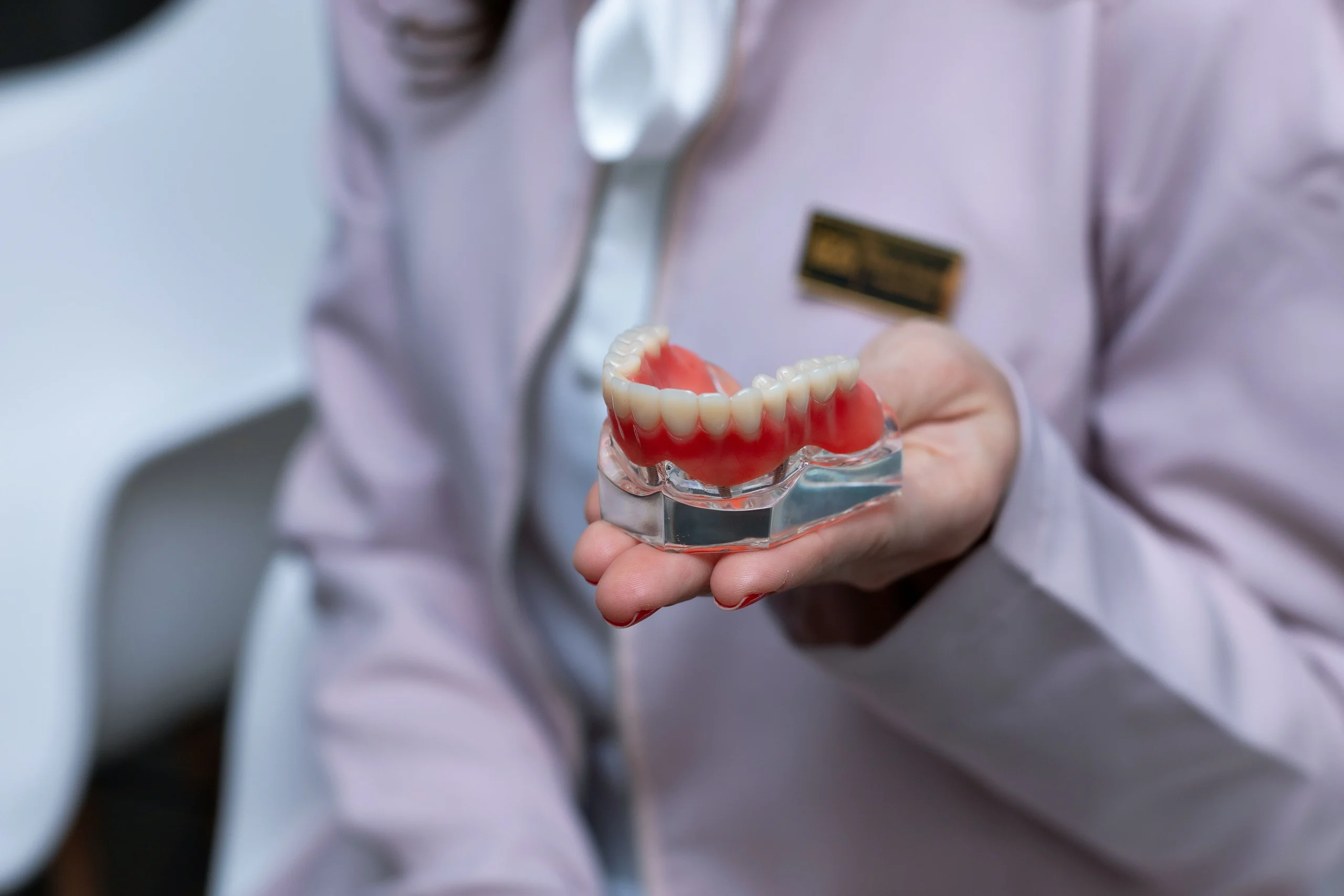
Implant-supported dentures attach a full denture to a small number of implants, usually two to six per arch. Removable versions snap on and off for cleaning. Fixed versions stay in place and can only be removed by your dentist.
This option suits patients missing most or all of their teeth who want more stability than a traditional denture. It costs less than replacing each tooth with its own implant. The implants themselves can last a lifetime, and the denture on top typically needs replacing every 15 to 20 years. Many current denture wearers upgrade to this option later.
How Do You Choose Between Dental Implants vs. Dentures?
Your choice between dental implants vs. dentures usually depends on four questions:
- Do you have enough healthy jawbone to anchor an implant, or would you need a bone graft first?
- Are your gums free of active periodontal disease?
- Do health factors like smoking, uncontrolled diabetes, or some medications affect healing?
- How do upfront cost and long-term cost compare for your budget?
Dr. David Tycast at Dental On First earned his dental degree from the University of Minnesota School of Dentistry in 2007. He provides implant placement, implant restoration, and dentures, so he can evaluate both options in the same visit. Dr. Taylor Majerus, a 2021 graduate of the University of Iowa College of Dentistry, also restores implants and fabricates dentures at the practice. Either dentist will typically start with an exam and X-rays to check bone volume before recommending one option over the other.
Next Steps for Replacing Missing Teeth in New Prague
The most useful thing you can bring to a consultation is a clear sense of your priorities. Decide whether long-term stability or lower upfront cost matters more to you, and bring any recent dental X-rays you have. That makes the conversation about dental implants vs. dentures specific to your mouth rather than general.
At Dental On First, we check your bone and gum health first, then walk you through every option you qualify for, including implant-supported dentures. If you’re looking for a dentist in New Prague, MN, to help you compare options, schedule a tooth replacement consultation with our team.
Address: 136 Main St., West New Prague, MN 56071
Phone: 952-758-3003
Email: office@dentalonfirst.com
Hours: Mon – Thurs 8:00 a.m. – 5:00 p.m.
Frequently Asked Questions
In most cases, no. Medicare.gov states that Original Medicare generally doesn’t cover dentures or implants. Some Medicare Advantage plans and private dental plans offer partial coverage. It is better to check your plan’s restorative benefits before treatment.
Yes, many denture wearers do. The main factor is how much jawbone remains. Bone loss continues the longer teeth are missing, so a bone graft may be needed before implants can be placed.